
Road Transport in Europe and Poland – Situation 2025/2026
Road transport in Europe, and especially in Poland, remains one of the key sectors of the economy. Poland has for many years been a leader in international road transport within the EU, handling a significant share of freight operations. Despite the large scale of activity, the years 2025/2026 are bringing increasingly difficult conditions, especially for small and medium-sized companies in the TSL sector. However, the current situation does not mean the collapse of the industry. It is more accurately described as a profound market transformation, forcing adaptation to new economic and regulatory conditions.
Factors affecting the TSL industry
In recent years, the transport and logistics sector has been heavily burdened by many factors:
- the COVID-19 pandemic, which disrupted supply chains and caused extreme demand fluctuations
- rising fuel prices, directly increasing the cost of every kilometer of transport
- increasing leasing and credit costs, especially affecting companies financing their fleets
- shortage of professional drivers, leading to wage pressure
- EU regulations, including the Mobility Package, increasing administrative burd
Situation of transport companies in 2025
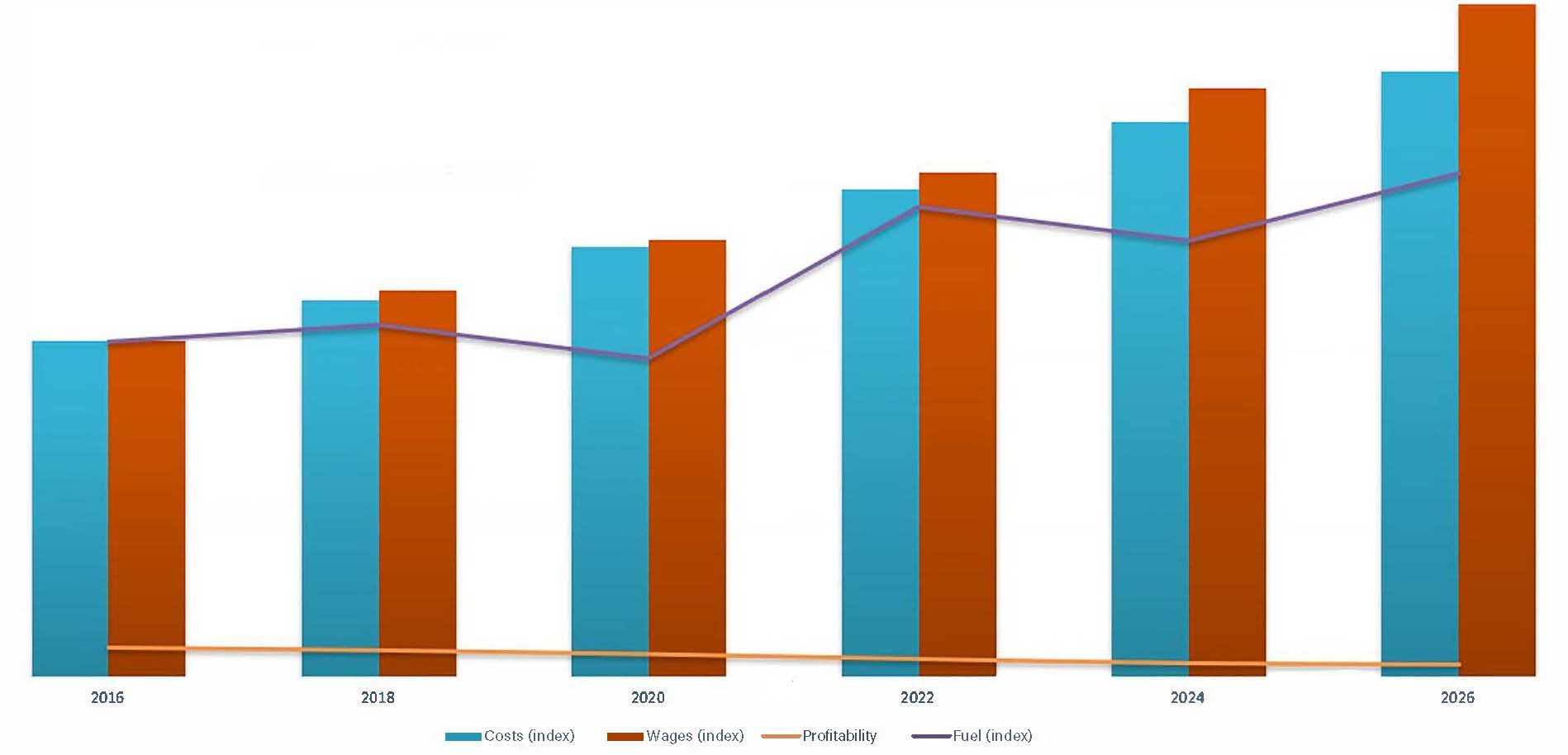
Currently, transport companies operate in conditions of rising costs and declining profitability. In many cases, margins have fallen to 1-3%, which limits the profitability of individual contracts. At the same time, operating costs have increased by several dozen percent in recent years. This affects the financial stability especially of smaller carriers. An additional problem is the instability of freight rates and strong price competition. The current changes should not be seen solely as a crisis. Rather, they represent a restructuring of the transport market in Europe. Companies that want to remain in the market must invest in cost optimization, digitalization of processes, and better management of their fleet and orders.
Why do small companies face more difficulties?
Will small companies disappear?
The first scenario is bankruptcy or closure of operations. It applies to companies that are unable to compete on costs, do not have long-term contracts, and operate solely on low-margin spot orders. In a rising cost environment, such firms are the first to exit the market.
The second scenario is the transformation of a small company into a medium-sized entity. This applies to businesses that invest in their fleet, build a base of regular clients, optimize costs, and gradually increase the scale of operations. In their case, growth is not rapid but systematic.
The third scenario is specialization and long-term survival in a niche. These companies do not compete directly with large operators but focus on specific market segments such as specialized transport, local deliveries, refrigerated transport, or oversized cargo. This allows them to avoid direct price pressure and maintain more stable profitability.
In summary, the market of small transport companies will not disappear, but it will undergo clear restructuring. There will be fewer entities, greater specialization, and increased importance of operational efficiency and access to long-term contracts.
But why is transport still growing?
Despite numerous problems and increasing cost pressure, the road transport sector continues to grow because the demand for logistics services is not decreasing. On the contrary, it is steadily increasing alongside economic development and trade. A key factor is the growth of international trade and the globalization of supply chains. More and more goods need to be regularly transported between countries and regions. Additionally, the rapid development of e-commerce has significantly increased the number of small and medium-sized shipments. This has led to higher demand for road transport, especially in domestic deliveries and last-mile logistics.
The transport market is undergoing a deep structural transformation. This means a shift from a fragmented model to a more consolidated system. There are fewer small independent companies, while the importance of large logistics operators is growing. They have larger fleets and advanced management systems, giving them a cost advantage. At the same time, digitalization of transport processes is progressing. Companies are increasingly using TMS systems and telematics. They also apply automatic route planning and tools for monitoring fuel consumption and driver performance. Transport is becoming a data-driven and optimization-based industry. Another important trend is specialization among transport companies. Smaller enterprises increasingly focus on market niches such as refrigerated transport, ADR, oversized cargo, or local distribution. This helps reduce price competition and build advantages in narrower segments.
The importance of EU regulations and environmental pressure is also increasing. Companies must invest in modern and more ecological fleets, which also requires better emissions management. The market is becoming more capital- and technology-intensive. This further strengthens consolidation and limits the possibilities for the smallest companies.